How to Treat Oily Dehydrated Skin Without Stripping It
Share
Your face can look shiny by lunchtime, break out around the jawline, and still feel uncomfortably tight after cleansing. That is the frustrating contradiction behind oily dehydration. Learning how to treat oily dehydrated skin means stopping the cycle of treating every bit of shine as excess oil. Your skin may be producing sebum while desperately lacking water and barrier support.
This is especially common in skin that never grew out of acne, in people using strong active ingredients, and during seasonal weather changes. The answer is not a heavier cream or a harsher cleanser. It is a disciplined, barrier-first routine that gives oily skin hydration without encouraging congestion.
Oily skin and dehydrated skin are not opposites
Oil is sebum, the waxy substance your sebaceous glands produce. Hydration is water content within the skin. You can naturally produce plenty of oil and still have a surface that is low in water, vulnerable, and easily irritated.
When skin is dehydrated, it may look dull beneath the shine, feel tight after washing, or show fine lines that soften temporarily when you apply moisturizer. Makeup can separate or cling around the nose and mouth. You may also notice that pimples feel more inflamed, because a stressed barrier is less able to tolerate acne treatments and environmental exposure.
Oily dehydrated skin often has a reactive pattern: cleanse aggressively, feel squeaky clean, become shiny again, then reach for another drying product. That short-term matte finish can feel satisfying, but it can leave the barrier more compromised. Oil is not proof that your skin has enough water.
Why oily dehydrated skin happens
Over-cleansing is one frequent cause. Foaming cleansers, cleansing brushes, hot water, and washing more than twice daily can remove too much of the skin's protective lipid layer. The result is tight, thirsty skin that may appear to compensate with more visible oil.
Overusing exfoliants is another common issue. Salicylic acid, glycolic acid, scrubs, peel pads, and retinoids can be helpful tools, but layering several active products without a plan often creates persistent sensitivity. If your cheeks sting when you apply even a basic moisturizer, that is not a sign to add another exfoliant.
Weather, indoor heat, air conditioning, travel, stress, certain medications, and hormonal shifts can all contribute. So can acne routines built around the idea that every breakout needs to be dried out. Acne-prone skin needs pore support, but it also needs a barrier capable of healing.
How to treat oily dehydrated skin with a barrier-first routine
The most effective routine is usually simpler than the one that got you here. Give your skin consistent hydration and use corrective ingredients with enough restraint that it can respond well.
Start with a gentle, thorough cleanse
Cleanse at night to remove sunscreen, makeup, oil, and the day's buildup. In the morning, a gentle cleanse may be appropriate if you wake up very oily, but some dehydrated skin does better with a splash of lukewarm water or a minimal cleanse.
Choose a cleanser that leaves your skin comfortable, not squeaky. “Clean” should not mean stripped. If your face feels tight before you have even reached for toner, your cleanser may be working against the rest of your routine.
If you wear long-wear makeup or water-resistant sunscreen, use an appropriate first cleanse followed by a gentle water-based cleanser. Rubbing harder is not the answer. Thorough removal with less friction is kinder to an already stressed barrier.
Add water, then help hold it in
A lightweight hydrating toner or serum can make a meaningful difference for skin that feels oily yet tight. Look for humectants that attract water, such as glycerin, hyaluronic acid, panthenol, or sodium PCA. Apply them to slightly damp skin when possible, then follow promptly with moisturizer.
Humectants alone are not always enough. In a dry environment, water-attracting ingredients need a supportive moisturizer on top so that the skin does not simply lose that moisture back into the air. This is where many oily-skinned people stop too soon because they are afraid of shine.
Use a moisturizer, even if you break out
A well-chosen moisturizer does not need to feel thick, greasy, or occlusive. Gel-creams and lightweight lotions can provide hydration while supporting the skin's lipid barrier. Ingredients such as ceramides, squalane, fatty acids, and niacinamide can be helpful, but texture and tolerance matter as much as an ingredient list.
If your skin is dry in some areas and oily in others, adjust by zone. Use a light layer over the whole face and add a little more to tight areas such as the cheeks, corners of the nose, or around the mouth. You do not need to punish your T-zone to care for the rest of your face.
Protect every morning with sunscreen
Daily broad-spectrum SPF is essential, particularly if you are working on acne marks, redness, pigmentation, or uneven texture. UV exposure can worsen inflammation and make a weakened barrier slower to recover. It can also make dehydration lines look more pronounced.
The right sunscreen is the one you will apply generously and consistently. If a formula feels heavy, pills under makeup, or leaves you noticeably congested, it may not be the right fit for your skin. A licensed esthetician can help narrow down textures that work with your routine rather than fighting it.
Be strategic with acne treatments and vitamin A
Oily dehydrated skin does not need to avoid corrective skincare forever. It needs a plan. Salicylic acid may be useful for clogged pores, while vitamin A can support smoother texture, clearer-looking skin, and more refined overall skin behavior. The trade-off is that either can become irritating when introduced too frequently or combined with too many other actives.
Start one new corrective product at a time. Use it on alternating nights or a few nights each week, depending on your skin's current condition and the product's strength. On the other nights, return to cleansing, hydrating, and moisturizing. This gives your skin a chance to adapt instead of constantly reacting.
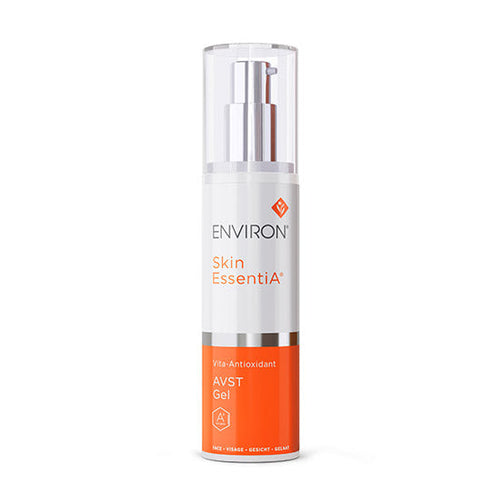
Professional vitamin A systems, including Environ's step-up approach, are designed to help skin progress gradually rather than forcing it into an aggressive routine. That progression matters. A higher-strength product is not automatically a better choice if your skin is flaking, burning, or producing more inflammation.
For active acne, a few clogged pores may require a different approach than widespread redness, deep painful breakouts, or persistent peeling. If acne is cystic, scarring, suddenly severe, or affecting your confidence and daily life, involve a dermatologist. Skincare can support the skin beautifully, but medical acne may need medical care.
What to pause while your skin recovers
When oily dehydration is obvious, reduce the habits that keep the cycle going. This may mean putting aside physical scrubs, astringent toners, clay masks used several times a week, alcohol-heavy spot treatments, and multiple exfoliating acids in the same routine.
You do not have to eliminate every active ingredient permanently. Think of this as creating recovery space. Once your skin no longer feels tight, stings, or flakes, you can carefully reintroduce the treatment that serves your main concern. If congestion is your biggest issue, that may be a pore-focused exfoliant. If texture and signs of aging are the priority, it may be vitamin A. Trying to solve everything at once rarely gives skin its best chance.
Also resist the urge to change products every few days. Barrier recovery is not always dramatic. Often, the first signs are subtle: less post-cleanse tightness, makeup sitting better, reduced midday oil slick, and fewer irritated breakouts. Consistency lets you see what is actually helping.
When your routine needs professional guidance
A personalized routine is especially worthwhile if you are oily and dehydrated but also dealing with rosacea, melasma, post-acne marks, sensitivity, pregnancy-related changes, or menopause-associated dryness. These concerns can overlap, and the product that helps one can aggravate another when used without guidance.
A licensed esthetician can assess whether your shine is primarily oil production, dehydration, product irritation, or a combination. From there, your routine can be built around a manageable sequence: cleanse, hydrate, correct, moisturize, and protect. That is far more effective than collecting random products that all promise to control oil.
Your skin does not need to feel stripped to look clear. Give it water, give it barrier support, and use corrective products with patience. The goal is not a perfectly matte face by noon. It is calm, comfortable skin that can regulate itself and move into its best chapter.